
题目
单项选择题
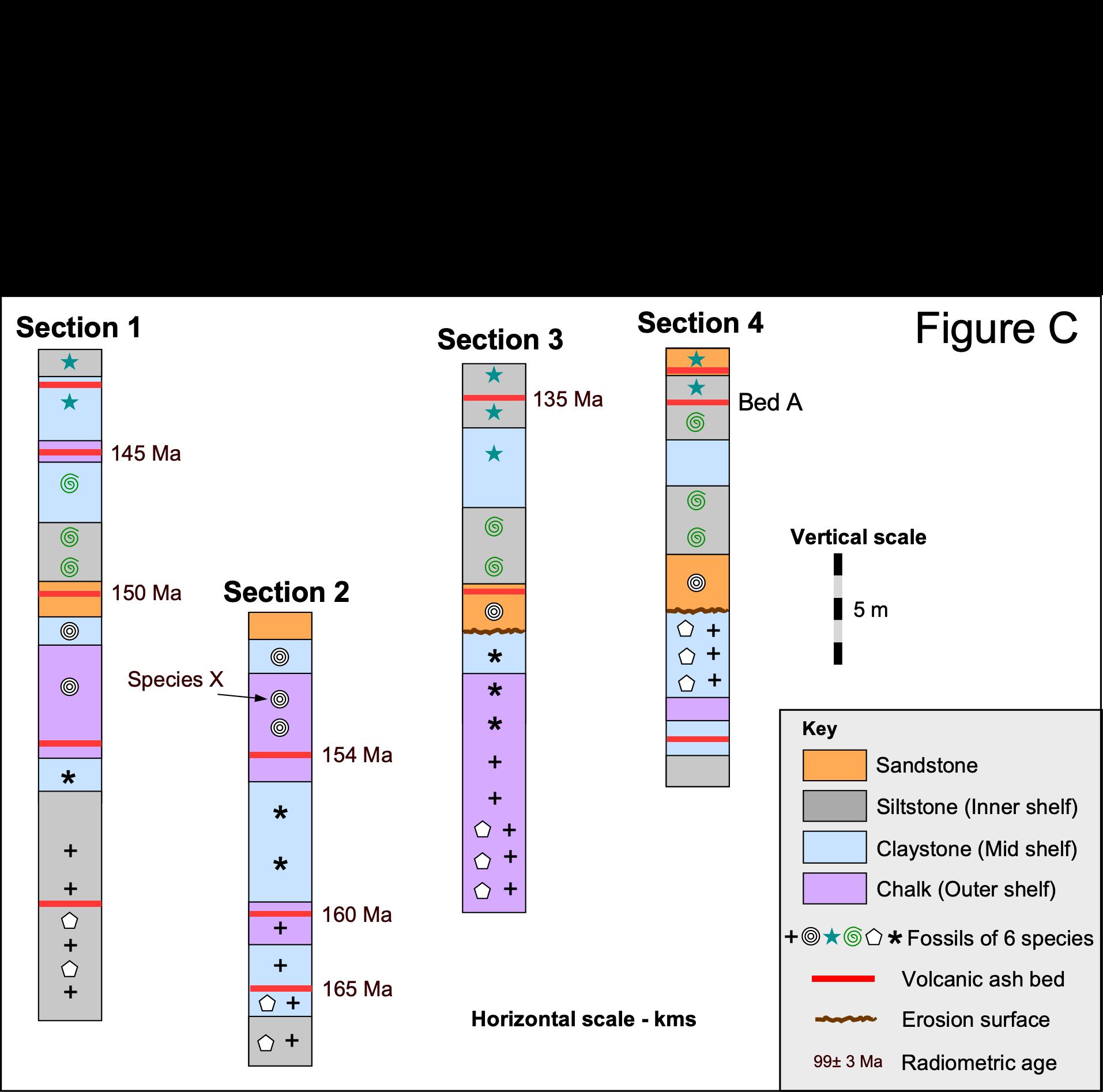
Using the fossil distributions, age information and other stratigraphic features shown in Figure (C), which section has the shortest age range?
选项
A.a. Section 4
B.b. Section 3
C.c. Section 1
D.d. Section 2

查看解析
标准答案
Please login to view
思路分析
First, I will restate the problem and the available choices to set the stage for analysis.
Question: Using the fossil distributions, age information and other stratigraphic features shown in Figure (C), which section has the shortest age range?
Answer options:
- a. Section 4
- b. Section 3
- c. Section 1
- d. Section 2
Now, I’ll evaluate each option in turn.
Option a: Section 4
- The shortest age range implies the section spans the smallest interval of time between the oldest and youngest dated features, fossils, or radiometric ages.
- In Figure (C), Section 4 shows a vertical column with tightly clustered fossil assemblages and s......Login to view full explanation登录即可查看完整答案
我们收录了全球超50000道考试原题与详细解析,现在登录,立即获得答案。
类似问题
When looking at undisturbed sedimentary rocks in an "outcrop," such as the cliff exposure you might see in a road-cut, the rocks will be arranged in [ Select ] planar dikes layers subrounded magma bodies a single mass that are oriented [ Select ] tipped an an angle vertically horizontally with no consistent orientation with the youngest rock [ Select ] on the top in the middle on the bottom
To constrain the age of fault D in the Pallett Creek trench as closely as possible, you would also want to date layer number _____, which would be just older than the earthquake. (Type in the number, such as "4," not the word, such as "four.")
All of the events of earth history can be placed in sequence using the principles of relative time called?
In a consumer society, many adults channel creativity into buying things
更多留学生实用工具
希望你的学习变得更简单
加入我们,立即解锁 海量真题 与 独家解析,让复习快人一步!