
题目
MATH_1225_64262_202506 5.1 Areas and Distances
多重下拉选择题
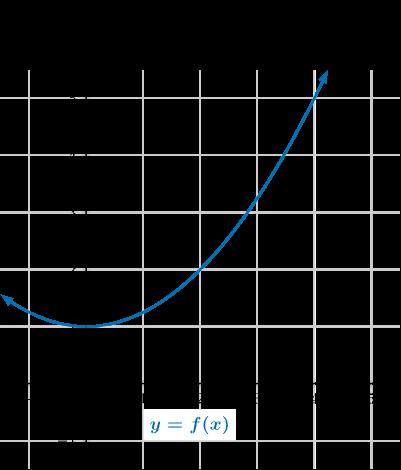
Suppose is increasing on the interval and we want to estimate the area under the curve on this interval. If is concave down on this interval, using left endpoints would give an underestimation. . If is concave down on this interval, using right endpoints would give an overestimation . If is concave up on this interval, using left endpoints would give an underestimation . If is concave up on this interval, using right endpoints would give an overestimation . If is not known to be increasing or decreasing on , which of the above statements must be true? None of them.

查看解析
标准答案
Please login to view
思路分析
Rewriting the problem in my own words helps set the stage: we’re estimating the area under f on [a,b] using Riemann sums, and we have four qualitative statements about under- or over-estimation depending on concavity and endpoint choice. The final question asks, if we do not know whether f is increasing or decreasing, which statements must be true?
Option 1: 'an underestimation.' (Left endpoints when f is concave down on the interval and increasing) In this scenario, the left-endpoint rectangle height is f(x_{i-1}). Since f is increasing, f(x_{i-1}) ≤ f(x) for x in [x_{i-1}, x_i], so the left-rectangle area is less than or equal to the actual area over that subinterval. Howeve......Login to view full explanation登录即可查看完整答案
我们收录了全球超50000道考试原题与详细解析,现在登录,立即获得答案。
类似问题
Match the type of estimation technique shown in the pictures with the correct label. 1: ____ 2: ____ 3: ____ 4: ____
Find the difference between the upper and lower estimates of the distance traveled at velocity 25−t2 on the interval 1≤t≤4 for 1000 subdivisions.
Express the following integral as a limit of Riemann sums:
Suppose we want to find the area under the curve (pictured below) on the interval using a Riemann sum with rectangles. Which of the following provides the most accurate approximation of the area under the curve on the given interval?
更多留学生实用工具
希望你的学习变得更简单
加入我们,立即解锁 海量真题 与 独家解析,让复习快人一步!