
题目
单项选择题
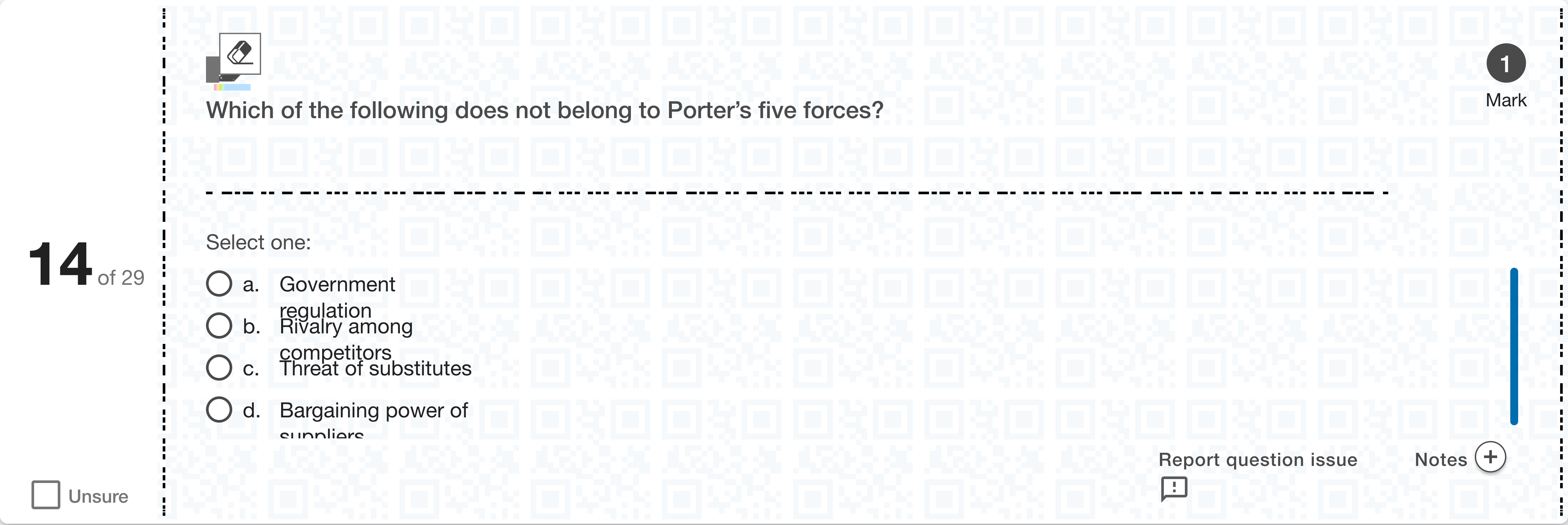
<!-- function msoCommentShow(anchor_id, com_id) { if(msoBrowserCheck()) { c = document.all(com_id); a = document.all(anchor_id); if (null != c && null == c.length && null != a && null == a.length) { var cw = c.offsetWidth; var ch = c.offsetHeight; var aw = a.offsetWidth; var ah = a.offsetHeight; var x = a.offsetLeft; var y = a.offsetTop; var el = a; while (el.tagName != "BODY") { el = el.offsetParent; x = x + el.offsetLeft; y = y + el.offsetTop; } var bw = document.body.clientWidth; var bh = document.body.clientHeight; var bsl = document.body.scrollLeft; var bst = document.body.scrollTop; if (x + cw + ah / 2 > bw + bsl && x + aw - ah / 2 - cw >= bsl ) { c.style.left = x + aw - ah / 2 - cw; } else { c.style.left = x + ah / 2; } if (y + ch + ah / 2 > bh + bst && y + ah / 2 - ch >= bst ) { c.style.top = y + ah / 2 - ch; } else { c.style.top = y + ah / 2; } c.style.visibility = "visible"; } } } function msoCommentHide(com_id) { if(msoBrowserCheck()) { c = document.all(com_id); if (null != c && null == c.length) { c.style.visibility = "hidden"; c.style.left = -1000; c.style.top = -1000; } } } function msoBrowserCheck() { ms = navigator.appVersion.indexOf("MSIE"); vers = navigator.appVersion.substring(ms + 5, ms + 6); ie4 = (ms > 0) && (parseInt(vers) >= 4); return ie4; } if (msoBrowserCheck()) { document.styleSheets.dynCom.addRule(".msocomanchor","background: infobackground"); document.styleSheets.dynCom.addRule(".msocomoff","display: none"); document.styleSheets.dynCom.addRule(".msocomtxt","visibility: hidden"); document.styleSheets.dynCom.addRule(".msocomtxt","position: absolute"); document.styleSheets.dynCom.addRule(".msocomtxt","top: -1000"); document.styleSheets.dynCom.addRule(".msocomtxt","left: -1000"); document.styleSheets.dynCom.addRule(".msocomtxt","width: 33%"); document.styleSheets.dynCom.addRule(".msocomtxt","background: infobackground"); document.styleSheets.dynCom.addRule(".msocomtxt","color: infotext"); document.styleSheets.dynCom.addRule(".msocomtxt","border-top: 1pt solid threedlightshadow"); document.styleSheets.dynCom.addRule(".msocomtxt","border-right: 2pt solid threedshadow"); document.styleSheets.dynCom.addRule(".msocomtxt","border-bottom: 2pt solid threedshadow"); document.styleSheets.dynCom.addRule(".msocomtxt","border-left: 1pt solid threedlightshadow"); document.styleSheets.dynCom.addRule(".msocomtxt","padding: 3pt 3pt 3pt 3pt"); document.styleSheets.dynCom.addRule(".msocomtxt","z-index: 100"); } // --> Which of the following does not belong to Porter’s five forces?[Fill in the blank]
选项
A.a. Government regulation
B.b. Rivalry among competitors
C.c. Threat of substitutes
D.d. Bargaining power of suppliers

查看解析
标准答案
Please login to view
思路分析
To tackle this question, I will examine each option in the context of Porter’s five forces framework.
Option a: Government regulation. This is not one of Porter’s five forces. The framework focuses on competitive forces such as market rivalry, threat of new entrants, threat of substitutes, bargaining power of buyers, and bargaining power of suppliers. Gove......Login to view full explanation登录即可查看完整答案
我们收录了全球超50000道考试原题与详细解析,现在登录,立即获得答案。
类似问题
In the five-forces framework, the fear of price retaliation raises
In the Five-Forces framework substitutes erode profits because of which of the following factor?
Which part of the Five Forces Framework does the following example illustrate?A new technology has emerged that allows for the production of a highly efficient and cost-effective alternative to traditional fossil fuels. This technology has attracted significant investment and attention from both existing energy companies and new entrants into the market. As a result, established oil and gas companies are facing pressure to adapt their business models and invest in renewable energy sources.
In the five-forces framework, the growth rate of an industry will affect
更多留学生实用工具
希望你的学习变得更简单
加入我们,立即解锁 海量真题 与 独家解析,让复习快人一步!