
题目
单项选择题
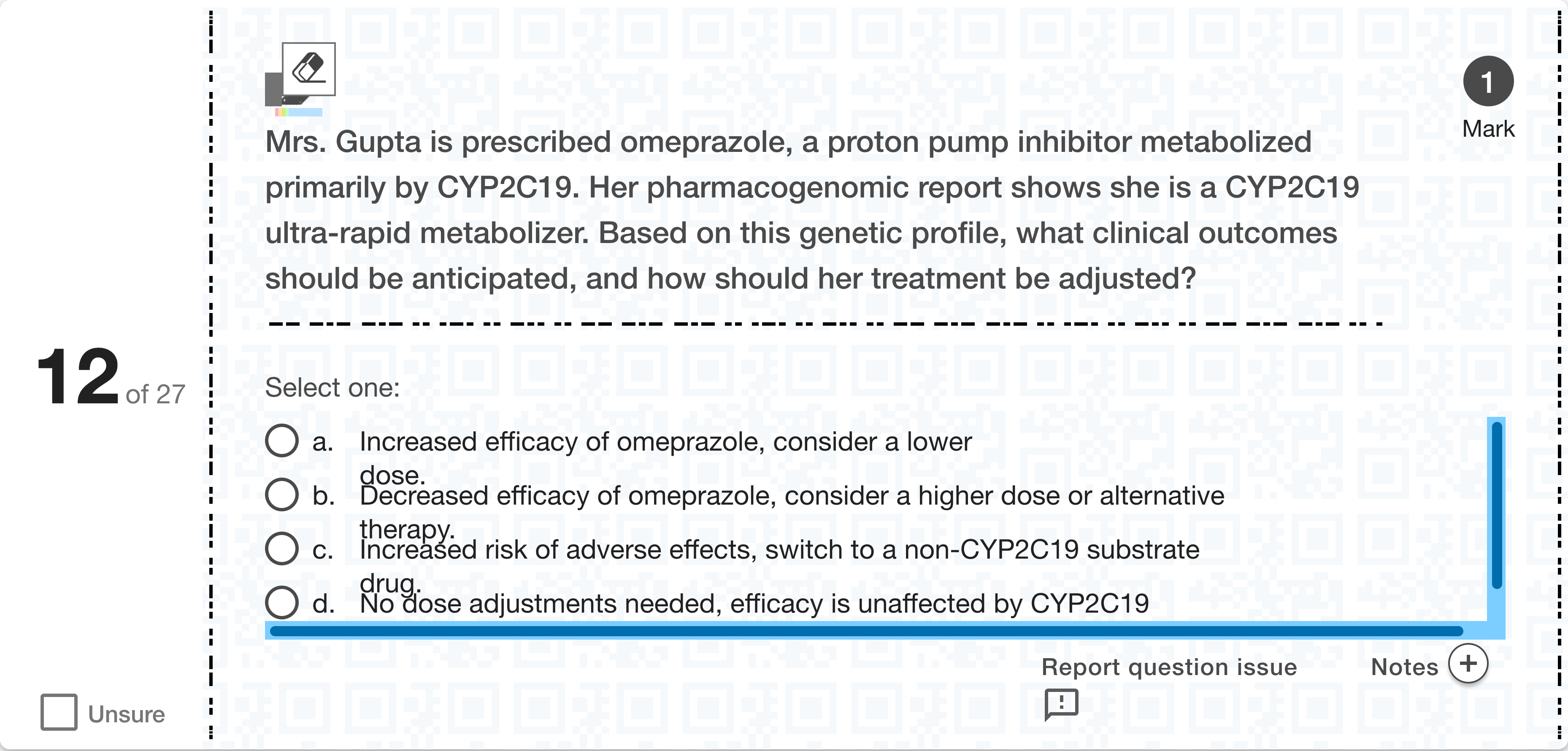
Mrs. Gupta is prescribed omeprazole, a proton pump inhibitor metabolized primarily by CYP2C19. Her pharmacogenomic report shows she is a CYP2C19 ultra-rapid metabolizer. Based on this genetic profile, what clinical outcomes should be anticipated, and how should her treatment be adjusted?[Fill in the blank]
选项
A.a. Increased efficacy of omeprazole, consider a lower dose.
B.b. Decreased efficacy of omeprazole, consider a higher dose or alternative therapy.
C.c. Increased risk of adverse effects, switch to a non-CYP2C19 substrate drug.
D.d. No dose adjustments needed, efficacy is unaffected by CYP2C19 genotype.

查看解析
标准答案
Please login to view
思路分析
Question restatement: Mrs. Gupta, on omeprazole (a proton pump inhibitor), has a pharmacogenomic profile showing CYP2C19 ultra-rapid metabolizer. Based on this genotype, what clinical outcomes should be anticipated, and how should treatment be adjusted?
Option a: Increased efficacy of omeprazole, consider a lower dose.
- Why it’s not correct: An ultra-rapid metabolizer clears CYP2C19 substrates like omeprazole more quickly, leading to lower, ......Login to view full explanation登录即可查看完整答案
我们收录了全球超50000道考试原题与详细解析,现在登录,立即获得答案。
类似问题
Evaluate the implications of pharmacogenomic variations in metabolizing enzymes when designing a clinical trial for a new cardiovascular drug.
How can genetic variation in HLA antigens influence drug therapy outcomes?
When considering the variability of drug metabolism among different geographical ancestries, which factor is most relevant for optimizing patient-specific therapy?
In evaluating a patient’s CYP2D6 phenotype before prescribing a drug with a narrow therapeutic window, which of the following represents the most critical clinical concerns?
更多留学生实用工具
希望你的学习变得更简单
加入我们,立即解锁 海量真题 与 独家解析,让复习快人一步!