
题目
Academic Courses Test#3
单项选择题
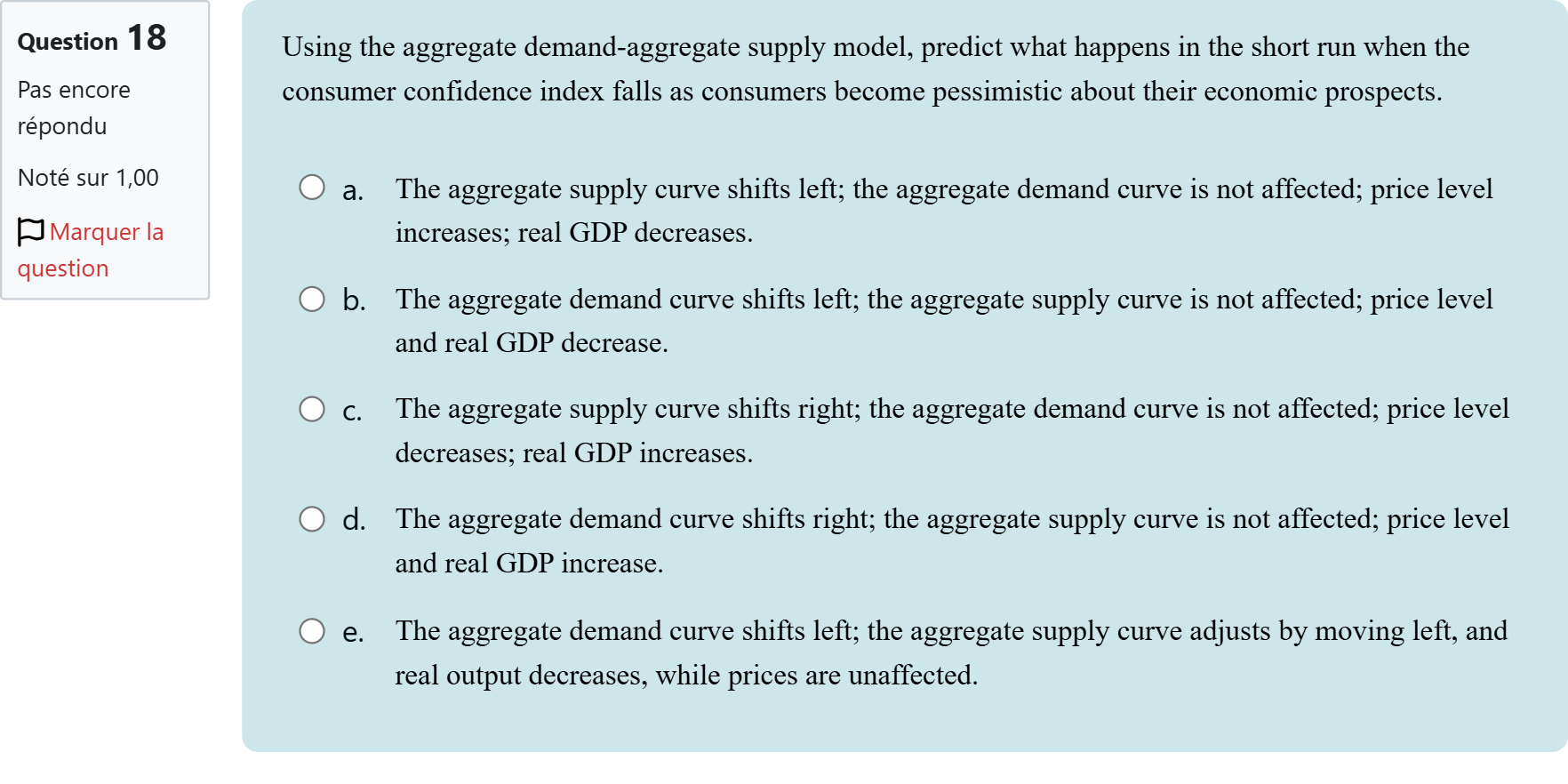
Using the aggregate demand-aggregate supply model, predict what happens in the short run when the consumer confidence index falls as consumers become pessimistic about their economic prospects.
选项
A.a. The aggregate supply curve shifts left; the aggregate demand curve is not affected; price level increases; real GDP decreases.
B.b. The aggregate demand curve shifts left; the aggregate supply curve is not affected; price level and real GDP decrease.
C.c. The aggregate supply curve shifts right; the aggregate demand curve is not affected; price level decreases; real GDP increases.
D.d. The aggregate demand curve shifts right; the aggregate supply curve is not affected; price level and real GDP increase.
E.e. The aggregate demand curve shifts left; the aggregate supply curve adjusts by moving left, and real output decreases, while prices are unaffected.

查看解析
标准答案
Please login to view
思路分析
To tackle this question, we first identify the scenario: a fall in the consumer confidence index implies households are pessimistic about the economy, which tends to reduce current and future spending. Now, evaluate each option in light of how AD and AS respond in the short run.
Option a: The aggregate supply curve shifts left; the aggregate demand curve is not affected; price level increases; real GDP decreases.
- This is incorrect because consumer confidence primarily affects demand, not the supply side. A shift in aggregate supply would require a change in production costs or capacity, which isn’......Login to view full explanation登录即可查看完整答案
我们收录了全球超50000道考试原题与详细解析,现在登录,立即获得答案。
类似问题
Assuming other factors being constant, a fall in imports results in a fall in aggregate demand.
In the long-run persistent increases in aggregate demand will:
The downward slope of the aggregate-demand curve shows that:
Assuming other factors being constant, a rise in exports results in a fall in aggregate demand.
更多留学生实用工具
希望你的学习变得更简单
加入我们,立即解锁 海量真题 与 独家解析,让复习快人一步!