
题目
多项填空题
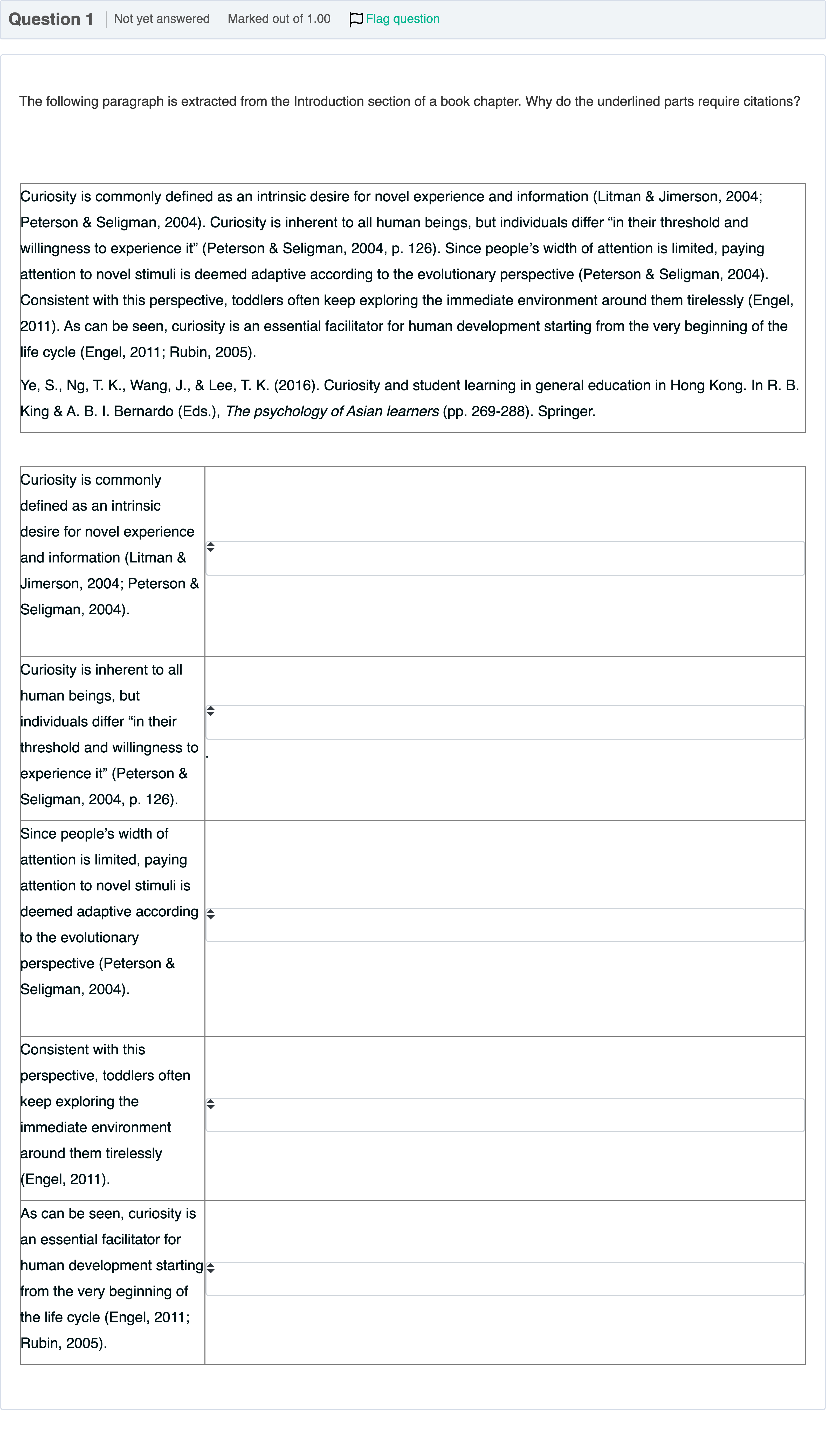
Question text <!-- function msoCommentShow(anchor_id, com_id) { if (msoBrowserCheck()) { c = document.all(com_id); a = document.all(anchor_id); if (null != c && null == c.length && null != a && null == a.length) { var cw = c.offsetWidth; var ch = c.offsetHeight; var aw = a.offsetWidth; var ah = a.offsetHeight; var x = a.offsetLeft; var y = a.offsetTop; var el = a; while (el.tagName != "BODY") { el = el.offsetParent; x = x + el.offsetLeft; y = y + el.offsetTop; } var bw = document.body.clientWidth; var bh = document.body.clientHeight; var bsl = document.body.scrollLeft; var bst = document.body.scrollTop; if (x + cw + ah / 2 > bw + bsl && x + aw - ah / 2 - cw >= bsl) { c.style.left = x + aw - ah / 2 - cw; } else { c.style.left = x + ah / 2; } if (y + ch + ah / 2 > bh + bst && y + ah / 2 - ch >= bst) { c.style.top = y + ah / 2 - ch; } else { c.style.top = y + ah / 2; } c.style.visibility = "visible"; } } } function msoCommentHide(com_id) { if (msoBrowserCheck()) { c = document.all(com_id); if (null != c && null == c.length) { c.style.visibility = "hidden"; c.style.left = -1000; c.style.top = -1000; } } } function msoBrowserCheck() { ms = navigator.appVersion.indexOf("MSIE"); vers = navigator.appVersion.substring(ms + 5, ms + 6); ie4 = (ms > 0) && (parseInt(vers) >= 4); return ie4; } if (msoBrowserCheck()) { document.styleSheets.dynCom.addRule(".msocomanchor", "background: infobackground"); document.styleSheets.dynCom.addRule(".msocomoff", "display: none"); document.styleSheets.dynCom.addRule(".msocomtxt", "visibility: hidden"); document.styleSheets.dynCom.addRule(".msocomtxt", "position: absolute"); document.styleSheets.dynCom.addRule(".msocomtxt", "top: -1000"); document.styleSheets.dynCom.addRule(".msocomtxt", "left: -1000"); document.styleSheets.dynCom.addRule(".msocomtxt", "width: 33%"); document.styleSheets.dynCom.addRule(".msocomtxt", "background: infobackground"); document.styleSheets.dynCom.addRule(".msocomtxt", "color: infotext"); document.styleSheets.dynCom.addRule(".msocomtxt", "border-top: 1pt solid threedlightshadow"); document.styleSheets.dynCom.addRule(".msocomtxt", "border-right: 2pt solid threedshadow"); document.styleSheets.dynCom.addRule(".msocomtxt", "border-bottom: 2pt solid threedshadow"); document.styleSheets.dynCom.addRule(".msocomtxt", "border-left: 1pt solid threedlightshadow"); document.styleSheets.dynCom.addRule(".msocomtxt", "padding: 3pt 3pt 3pt 3pt"); document.styleSheets.dynCom.addRule(".msocomtxt", "z-index: 100"); } // --> The following paragraph is extracted from the Introduction section of a book chapter. Why do the underlined parts require citations? [table] Curiosity is commonly defined as an intrinsic desire for novel experience and information (Litman & Jimerson, 2004; Peterson & Seligman, 2004). Curiosity is inherent to all human beings, but individuals differ “in their threshold and willingness to experience it” (Peterson & Seligman, 2004, p. 126). Since people’s width of attention is limited, paying attention to novel stimuli is deemed adaptive according to the evolutionary perspective (Peterson & Seligman, 2004). Consistent with this perspective, toddlers often keep exploring the immediate environment around them tirelessly (Engel, 2011). As can be seen, curiosity is an essential facilitator for human development starting from the very beginning of the life cycle (Engel, 2011; Rubin, 2005). Ye, S., Ng, T. K., Wang, J., & Lee, T. K. (2016). Curiosity and student learning in general education in Hong Kong. In R. B. King & A. B. I. Bernardo (Eds.), The psychology of Asian learners (pp. 269-288). Springer. [/table] <!-- function msoCommentShow(anchor_id, com_id) { if (msoBrowserCheck()) { c = document.all(com_id); a = document.all(anchor_id); if (null != c && null == c.length && null != a && null == a.length) { var cw = c.offsetWidth; var ch = c.offsetHeight; var aw = a.offsetWidth; var ah = a.offsetHeight; var x = a.offsetLeft; var y = a.offsetTop; var el = a; while (el.tagName != "BODY") { el = el.offsetParent; x = x + el.offsetLeft; y = y + el.offsetTop; } var bw = document.body.clientWidth; var bh = document.body.clientHeight; var bsl = document.body.scrollLeft; var bst = document.body.scrollTop; if (x + cw + ah / 2 > bw + bsl && x + aw - ah / 2 - cw >= bsl) { c.style.left = x + aw - ah / 2 - cw; } else { c.style.left = x + ah / 2; } if (y + ch + ah / 2 > bh + bst && y + ah / 2 - ch >= bst) { c.style.top = y + ah / 2 - ch; } else { c.style.top = y + ah / 2; } c.style.visibility = "visible"; } } } function msoCommentHide(com_id) { if (msoBrowserCheck()) { c = document.all(com_id); if (null != c && null == c.length) { c.style.visibility = "hidden"; c.style.left = -1000; c.style.top = -1000; } } } function msoBrowserCheck() { ms = navigator.appVersion.indexOf("MSIE"); vers = navigator.appVersion.substring(ms + 5, ms + 6); ie4 = (ms > 0) && (parseInt(vers) >= 4); return ie4; } if (msoBrowserCheck()) { document.styleSheets.dynCom.addRule(".msocomanchor", "background: infobackground"); document.styleSheets.dynCom.addRule(".msocomoff", "display: none"); document.styleSheets.dynCom.addRule(".msocomtxt", "visibility: hidden"); document.styleSheets.dynCom.addRule(".msocomtxt", "position: absolute"); document.styleSheets.dynCom.addRule(".msocomtxt", "top: -1000"); document.styleSheets.dynCom.addRule(".msocomtxt", "left: -1000"); document.styleSheets.dynCom.addRule(".msocomtxt", "width: 33%"); document.styleSheets.dynCom.addRule(".msocomtxt", "background: infobackground"); document.styleSheets.dynCom.addRule(".msocomtxt", "color: infotext"); document.styleSheets.dynCom.addRule(".msocomtxt", "border-top: 1pt solid threedlightshadow"); document.styleSheets.dynCom.addRule(".msocomtxt", "border-right: 2pt solid threedshadow"); document.styleSheets.dynCom.addRule(".msocomtxt", "border-bottom: 2pt solid threedshadow"); document.styleSheets.dynCom.addRule(".msocomtxt", "border-left: 1pt solid threedlightshadow"); document.styleSheets.dynCom.addRule(".msocomtxt", "padding: 3pt 3pt 3pt 3pt"); document.styleSheets.dynCom.addRule(".msocomtxt", "z-index: 100"); } // --> [table] Curiosity is commonly defined as an intrinsic desire for novel experience and information (Litman & Jimerson, 2004; Peterson & Seligman, 2004). | Answer 1 Question 1 The evolutionary perspective [a theory] is proposed by Peterson & Seligman (2004).The writers adopted the definition by these scholars.The idea contained in this sentence is taken from these scholars.The idea contained in this sentence is taken from Engel (2011).The writers used a direct quote from another source. Curiosity is inherent to all human beings, but individuals differ “in their threshold and willingness to experience it” (Peterson & Seligman, 2004, p. 126). | Answer 2 Question 1 The evolutionary perspective [a theory] is proposed by Peterson & Seligman (2004).The writers adopted the definition by these scholars.The idea contained in this sentence is taken from these scholars.The idea contained in this sentence is taken from Engel (2011).The writers used a direct quote from another source.. Since people’s width of attention is limited, paying attention to novel stimuli is deemed adaptive according to the evolutionary perspective (Peterson & Seligman, 2004). | Answer 3 Question 1 The evolutionary perspective [a theory] is proposed by Peterson & Seligman (2004).The writers adopted the definition by these scholars.The idea contained in this sentence is taken from these scholars.The idea contained in this sentence is taken from Engel (2011).The writers used a direct quote from another source. Consistent with this perspective, toddlers often keep exploring the immediate environment around them tirelessly (Engel, 2011). | Answer 4 Question 1 The evolutionary perspective [a theory] is proposed by Peterson & Seligman (2004).The writers adopted the definition by these scholars.The idea contained in this sentence is taken from these scholars.The idea contained in this sentence is taken from Engel (2011).The writers used a direct quote from another source. As can be seen, curiosity is an essential facilitator for human development starting from the very beginning of the life cycle (Engel, 2011; Rubin, 2005). | Answer 5 Question 1 The evolutionary perspective [a theory] is proposed by Peterson & Seligman (2004).The writers adopted the definition by these scholars.The idea contained in this sentence is taken from these scholars.The idea contained in this sentence is taken from Engel (2011).The writers used a direct quote from another source. [/table]

查看解析
标准答案
Please login to view
思路分析
The task presents a fill-in-blank extraction where each blank is to be filled with one of the provided options. Here, we have five candidate statements to evaluate in the context of the quoted paragraph about curiosity and its citations.
Option 1: "The writers adopted the definition by these scholars." This sentence directly references how the authors used prior definitions for curiosity, aligning with the idea that the paragraph draws on established definitions from Litman & Jimerson (2004) and Peterson & Seligman (2004). It is coherent as an editorial note explaining......Login to view full explanation登录即可查看完整答案
我们收录了全球超50000道考试原题与详细解析,现在登录,立即获得答案。
类似问题
Which of the following circumstances require citation:
Question text <!-- function msoCommentShow(anchor_id, com_id) { if(msoBrowserCheck()) { c = document.all(com_id); a = document.all(anchor_id); if (null != c && null == c.length && null != a && null == a.length) { var cw = c.offsetWidth; var ch = c.offsetHeight; var aw = a.offsetWidth; var ah = a.offsetHeight; var x = a.offsetLeft; var y = a.offsetTop; var el = a; while (el.tagName != "BODY") { el = el.offsetParent; x = x + el.offsetLeft; y = y + el.offsetTop; } var bw = document.body.clientWidth; var bh = document.body.clientHeight; var bsl = document.body.scrollLeft; var bst = document.body.scrollTop; if (x + cw + ah / 2 > bw + bsl && x + aw - ah / 2 - cw >= bsl ) { c.style.left = x + aw - ah / 2 - cw; } else { c.style.left = x + ah / 2; } if (y + ch + ah / 2 > bh + bst && y + ah / 2 - ch >= bst ) { c.style.top = y + ah / 2 - ch; } else { c.style.top = y + ah / 2; } c.style.visibility = "visible"; } } } function msoCommentHide(com_id) { if(msoBrowserCheck()) { c = document.all(com_id); if (null != c && null == c.length) { c.style.visibility = "hidden"; c.style.left = -1000; c.style.top = -1000; } } } function msoBrowserCheck() { ms = navigator.appVersion.indexOf("MSIE"); vers = navigator.appVersion.substring(ms + 5, ms + 6); ie4 = (ms > 0) && (parseInt(vers) >= 4); return ie4; } if (msoBrowserCheck()) { document.styleSheets.dynCom.addRule(".msocomanchor","background: infobackground"); document.styleSheets.dynCom.addRule(".msocomoff","display: none"); document.styleSheets.dynCom.addRule(".msocomtxt","visibility: hidden"); document.styleSheets.dynCom.addRule(".msocomtxt","position: absolute"); document.styleSheets.dynCom.addRule(".msocomtxt","top: -1000"); document.styleSheets.dynCom.addRule(".msocomtxt","left: -1000"); document.styleSheets.dynCom.addRule(".msocomtxt","width: 33%"); document.styleSheets.dynCom.addRule(".msocomtxt","background: infobackground"); document.styleSheets.dynCom.addRule(".msocomtxt","color: infotext"); document.styleSheets.dynCom.addRule(".msocomtxt","border-top: 1pt solid threedlightshadow"); document.styleSheets.dynCom.addRule(".msocomtxt","border-right: 2pt solid threedshadow"); document.styleSheets.dynCom.addRule(".msocomtxt","border-bottom: 2pt solid threedshadow"); document.styleSheets.dynCom.addRule(".msocomtxt","border-left: 1pt solid threedlightshadow"); document.styleSheets.dynCom.addRule(".msocomtxt","padding: 3pt 3pt 3pt 3pt"); document.styleSheets.dynCom.addRule(".msocomtxt","z-index: 100"); } // --> I. What is a citation? At university, almost all assignments you do (especially written papers) require citation. Read the following paragraph related to the concept of "citation" in academic writing. Fill in the blanks with the appropriate words or phrases based on the information provided. A "citation" is a proper Answer 1 Question 1[select: , academic integrity, acknowledgement, authority, field, other sources, plagiarism, scholars, support] of the use of others' ideas. Citation shows the readers that some ideas/materials in your work come from Answer 2 Question 1[select: , academic integrity, acknowledgement, authority, field, other sources, plagiarism, scholars, support]. Citation is essential in academic writing to demonstrate Answer 3 Question 1[select: , academic integrity, acknowledgement, authority, field, other sources, plagiarism, scholars, support]. One reason why citation is important in academic work is to give Answer 4 Question 1[select: , academic integrity, acknowledgement, authority, field, other sources, plagiarism, scholars, support] to your ideas and build/strengthen your arguments. Citation also helps to give Answer 5 Question 1[select: , academic integrity, acknowledgement, authority, field, other sources, plagiarism, scholars, support] to your work. By citing sources, you show respect for the Answer 6 Question 1[select: , academic integrity, acknowledgement, authority, field, other sources, plagiarism, scholars, support] who originated the idea and theory. Citation helps to distinguish and highlight your idea/contribution in your work and show how your argument relates to the big picture. Citation allows you to show your familiarity with ideas/arguments in the Answer 7 Question 1[select: , academic integrity, acknowledgement, authority, field, other sources, plagiarism, scholars, support]. Proper citation helps to avoid Answer 8 Question 1[select: , academic integrity, acknowledgement, authority, field, other sources, plagiarism, scholars, support]. II. What is proper acknowledgement? 1. What is the primary purpose of citing a source in an academic text? Multiple choice 1 Question 1A To show off your knowledgeB To give credit to the original authorC To make your work look longerD To fill up space on the page 2. When should you provide an in-text citation? Multiple choice 2 Question 1A Only when directly quoting a sourceB Only when paraphrasing a sourceC When quoting, paraphrasing, or summarizing a sourceD Never 3. What should be included in the References section at the end of your work? Multiple choice 3 Question 1A Only the sources you directly quotedB Only the sources you paraphrasedC All the sources you referred to in your workD None of the above
不需要引用计算机代码。
ORIGINAL TEXT From page 445 of a book by Johnston, Gostelow and Jones published in 1999 Traditionally engineers have tended to focus on the hardware aspects of energy issues. There is a role for this approach, for example in helping to improve the efficiency of traditional cooking equipment. However, to be most effective, engineers also need to take time to review the assumptions underlying the technology and to clarify the problems it is intended to solve. STUDENT'S ASSIGNMENT Johnston, Gostelow and Jones (1999) argue that the role of engineers is not only to improve existing technology, but also to consider the purpose of technology and why it is being used. Is the student’s citation acceptable?
更多留学生实用工具
希望你的学习变得更简单
加入我们,立即解锁 海量真题 与 独家解析,让复习快人一步!