
Questions
MATH_1225_64262_202506 5.1 Areas and Distances
Multiple dropdown selections
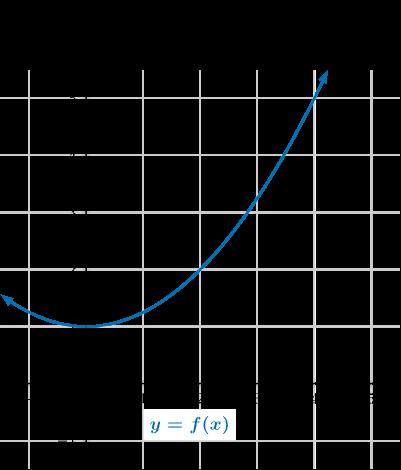
Suppose is increasing on the interval and we want to estimate the area under the curve on this interval. If is concave down on this interval, using left endpoints would give an underestimation. . If is concave down on this interval, using right endpoints would give an overestimation . If is concave up on this interval, using left endpoints would give an underestimation . If is concave up on this interval, using right endpoints would give an overestimation . If is not known to be increasing or decreasing on , which of the above statements must be true? None of them.

View Explanation
Verified Answer
Please login to view
Step-by-Step Analysis
Rewriting the problem in my own words helps set the stage: we’re estimating the area under f on [a,b] using Riemann sums, and we have four qualitative statements about under- or over-estimation depending on concavity and endpoint choice. The final question asks, if we do not know whether f is increasing or decreasing, which statements must be true?
Option 1: 'an underestimation.' (Left endpoints when f is concave down on the interval and increasing) In this scenario, the left-endpoint rectangle height is f(x_{i-1}). Since f is increasing, f(x_{i-1}) ≤ f(x) for x in [x_{i-1}, x_i], so the left-rectangle area is less than or equal to the actual area over that subinterval. Howeve......Login to view full explanationLog in for full answers
We've collected over 50,000 authentic exam questions and detailed explanations from around the globe. Log in now and get instant access to the answers!
Similar Questions
Match the type of estimation technique shown in the pictures with the correct label. 1: ____ 2: ____ 3: ____ 4: ____
Find the difference between the upper and lower estimates of the distance traveled at velocity 25−t2 on the interval 1≤t≤4 for 1000 subdivisions.
Express the following integral as a limit of Riemann sums:
Suppose we want to find the area under the curve (pictured below) on the interval using a Riemann sum with rectangles. Which of the following provides the most accurate approximation of the area under the curve on the given interval?
More Practical Tools for Students Powered by AI Study Helper
Making Your Study Simpler
Join us and instantly unlock extensive past papers & exclusive solutions to get a head start on your studies!